Karate
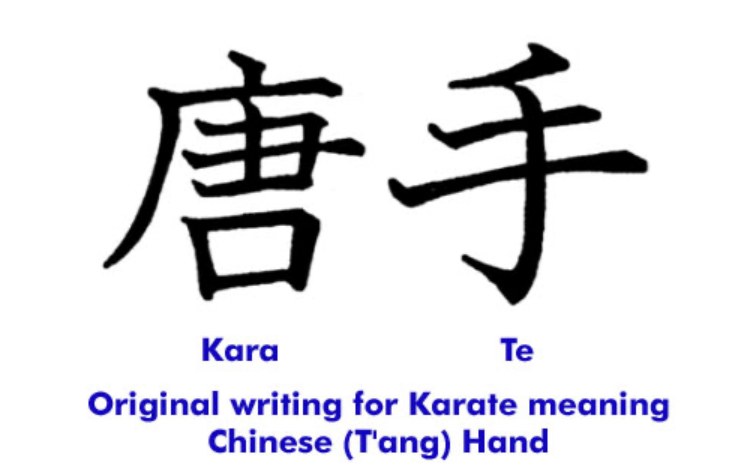
Karate stands for “Empty hands” in Japanese and is one of the martial art forms that originated in the Ryukyu Kingdom of the Okinawan islands as a form of self defense during the early 20th century, when using weapons were banned by the invading Japanese forces. It made its debut as an Olympic sport in the 2021 Tokyo Olympics.
Karate is a contact martial arts, predominantly a striking art using punching, kicking, knee and elbow strikes, and open hand techniques. A karate practitioner is called a “Karateka”.
There are many theories related to the origin of Karate. One such theory states that it came from India thousands of years ago, and was brought to China by Bodhidharma (a Buddhist monk), who started teaching exercises to strengthen body and mind at Shaolinsi.
Karate can be practiced as an art, self defense or as a combat sport. Traditional karate places emphasis on self development (Budo in Japanese). Modern style training emphasizes the psychological aspects incorporated into a proper attitude (Kokoro in Japanese) such as perseverance, fearlessness, virtue and leadership skills. Karate as a sport emphasizes exercise and competition.
Karate training is divided into basics or fundamentals (Kihon), forms (Kata) and sparring (Kumite).
Karate is practiced in many styles which differ in the training methods, focuses and culture, although these originated from the historical Okinawan parent styles of Naha-te, Tomari-te and Shuri-te. In modern times four styles of karate are popular and recognized by the World Karate Federation for international competition. They are: Goju-ryu, Shotokan, Shito-ryu and Wado-ryu.
Significant Dates in the History of Karate
| Year | Event |
|---|---|
| 1905 | Karate is included in Okinawa’s physical education programs at the intermediate level |
| 1917 | Funakoshi gives the first public demonstration of karate-do |
| 1922 | Funakoshi is invited by Dr. Jano Kano to give a demonstration at the Kodokan Dojo, bringing karate-do to Japan |
| 1924 | The first university karate club is established in Japan, at Keio University |
| 1930s | Karate makes its way to Canada |
| 1936 | Okinawan masters meet to discuss karate in Okinawa, a meeting sponsored by the newspaper Ryukyu Shimpo |
| 1939 | Japan opens Shoto-Kan, its first formal training school |
| 1945 | The first dojo was opened in the United States |
| 1949 | The Japan Karate Association is formed |
| 1950s | Karate is introduced in the United Kingdom |
| 1960s | Karate makes its way to the Soviet Union and is banned and unbanned several times over the next three decades |
| 1964 | France Shotokan Karate is created in France |
| 1989 | Karate is legalized once again in the Soviet Union |
Significant Historical Figures
- Gichin Funakoshi — Founder of Shotokan
- Dr. Jano Kano — Founder of Japanese judo
- Sakukawa Kanga — One of the first Okinawans to study in China
- Itosu Anko — Often called the “grandfather of karate”, brought karate to Okinawan schools and simplified it for increased public acceptance
- Chojun Miyagi — Named the Gōjū-ryu style
- Hironori Otsuka — Founder of the Wadō-ryu style
- Kenwa Mabuni — Founder of the Shitō-ryu style